
Why AI Ethics Matters for Businesses of All Sizes: Lessons from Deloitte and Beyond
Artificial intelligence is reshaping every corner of business — from recruitment and pricing to marketing and decision-making. But as adoption accelerates, so does the ethical risk that comes with it.
Many still treat “AI ethics” as a boardroom issue for global enterprises. That’s wrong. The risk surface is now embedded in everyday tools — CRM copilots, email generators, chatbots, analytics platforms. If you’re using them, you’re exposed.
Even basic AI features can amplify bias, leak sensitive data, or produce opaque decisions that directly impact customers and employees.
At its core, ethical AI isn’t compliance theater. It’s about trust, brand durability, and whether your growth compounds — or collapses under scrutiny.
The Real-World Wake-Up Calls
The pattern is already visible across industries:
- Deloitte (2025) — A government report generated with AI included fabricated references. The firm refunded the client and reinforced mandatory human review and disclosure requirements.
- Amazon — Shut down an AI recruiting system after it demonstrated systemic gender bias.
- Zillow — Over-reliance on algorithmic home pricing contributed to major financial losses and the shutdown of its iBuying program.
- McDonald’s — An AI hiring chatbot exposed applicant data due to a security vulnerability.
- Clearview AI — Faced global backlash and regulatory action over facial recognition practices lacking consent.
Different industries. Same failure mode: AI deployed faster than it was governed.
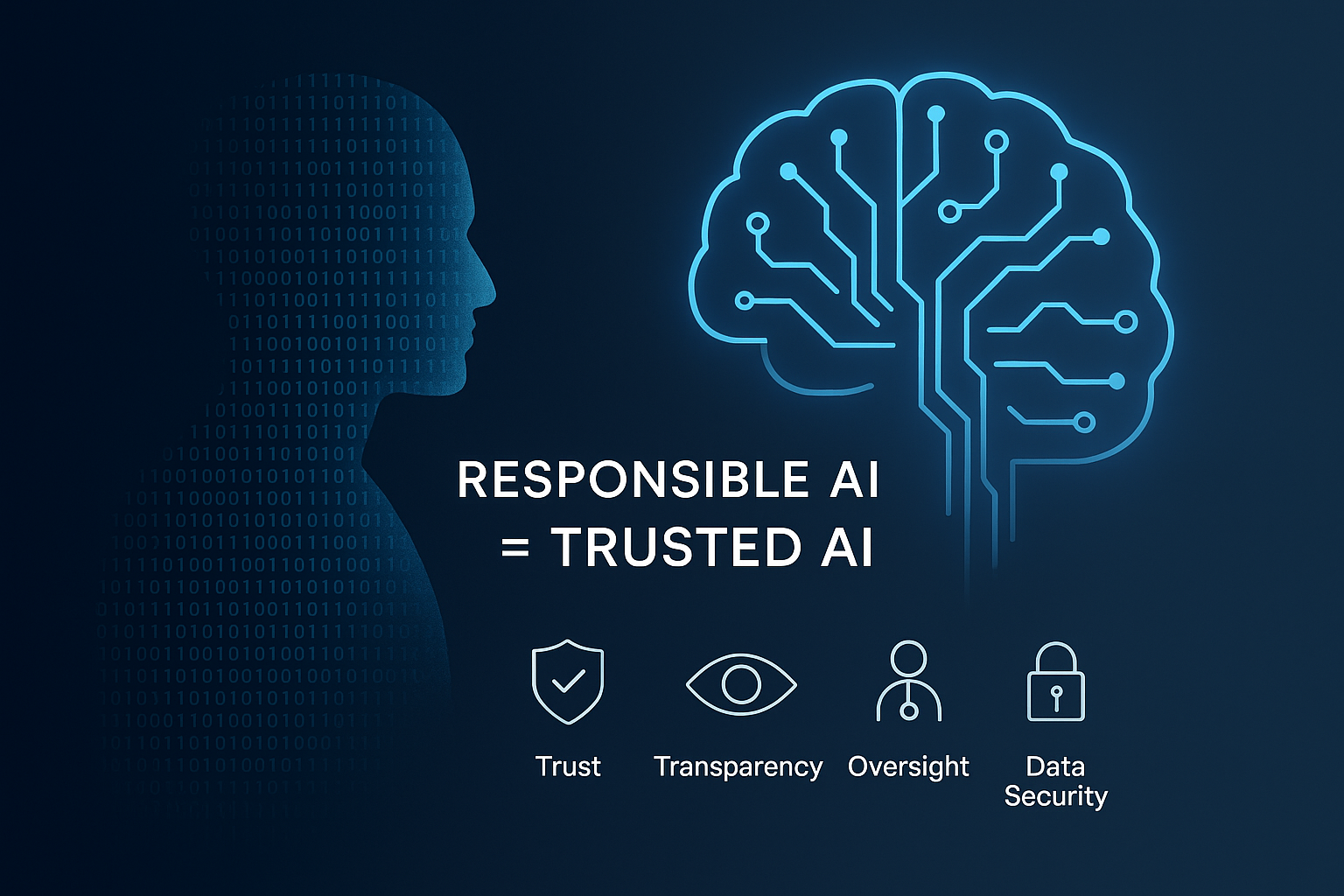
The Four Pillars of Responsible AI
If AI is going to sit inside your operating model, governance has to be structural — not aspirational.
1. Transparency & Explainability
People need to know when AI is being used and how it influences outcomes. Black-box decisions erode trust fast.
2. Bias Detection & Mitigation
If you’re not actively auditing for bias, you’re scaling it. Data inherits history — and history isn’t neutral.
3. Data Privacy & Security
“Privacy by design” isn’t optional when third-party AI tools are involved. Limit access. Control exposure. Assume breach.
4. Human Oversight & Accountability
AI should compress decision cycles — not remove accountability. Someone owns every output. No exceptions.
These aren’t soft principles. They’re operational controls.
And in a market where trust is a competitive asset, they’re a differentiator.
A Practical Playbook: SMBs vs. Enterprises
For SMBs
You don’t need a governance department — but you do need discipline:
- Inventory where AI is already being used, including email, CRM, HR tools, and analytics.
- Define a simple AI Code of Conduct that makes clear what is allowed and what is not.
- Train employees on bias, privacy, and responsible data handling.
Most SMB risk isn’t malicious. It’s unmanaged usage.
For Enterprises
At scale, informality breaks. You need structure:
- Stand up an AI Governance Council with representation from legal, IT, operations, and business leadership.
- Embed ethics checkpoints into your MLOps lifecycle.
- Introduce independent audits for high-impact or customer-facing models.
If AI touches revenue, hiring, pricing, or risk, it needs oversight at the same level.
The Bottom Line
AI ethics isn’t optional anymore. It’s a leadership decision.
The companies that treat AI as infrastructure — and govern it accordingly — will compound advantage.
The ones that don’t will eventually pay for it. In reputation, in regulation, or directly in the P&L.
At Transnova.ai, the focus is simple: design and operationalize AI systems that align innovation with accountability.
Because the future of AI won’t just be intelligent — it’ll be governed.
References
- Business Standard. Deloitte’s AI fiasco: fabricated references in government report. 2025.
- Reuters. Amazon scraps secret AI recruiting tool that showed bias against women. 2018.
- Zillow Group. Public disclosures and reporting on Zillow Offers shutdown. 2021.
- Cybersecurity reporting on McDonald’s AI hiring chatbot vulnerability. 2024–2025.
- Privacy and regulatory actions involving Clearview AI facial recognition practices. 2021–2024.