
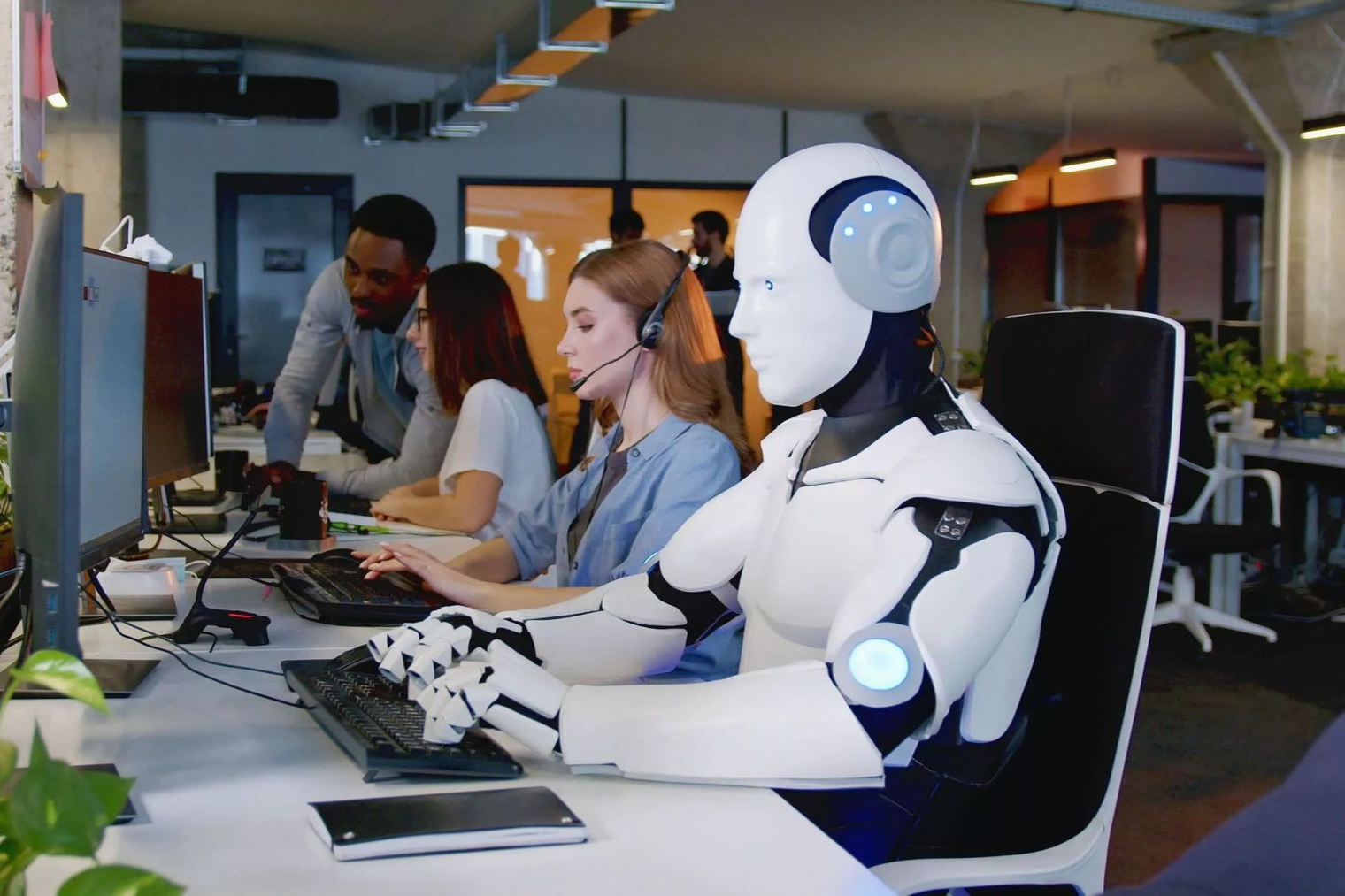
Executive Summary: Enterprises are accelerating AI investment while simultaneously announcing large-scale layoffs tied to automation and “efficiency.” Employees see AI as the catalyst—even if leadership insists otherwise. The result: collapsing trust, stalled adoption, and a widening execution gap. AI won’t fail because of technology. It will fail because employees no longer believe in the organization’s intent.
The Business Reality
AI has become a core lever for efficiency, cost transformation, and competitive positioning. But as major companies publicly tie headcount reductions to automation and AI-driven restructuring, employees aren’t waiting for internal messaging — they’re drawing their own conclusions.
And those conclusions have real commercial consequences. When trust drops, behaviors change:
- Adoption slows
- Innovation stalls
- Pilots underperform
- Productivity dips
- Talent disengages
This isn’t a cultural issue. It’s a performance constraint. AI cannot scale inside a workforce that doesn’t trust leadership’s intent — and without trust, even the strongest AI strategy becomes a stalled initiative.
Why This Matters
Amazon, Microsoft, Salesforce, Meta, UPS and others have all linked recent workforce reductions to AI and automation. Employees see these stories in real time, often before any internal communication lands. When “AI investment” and “headcount reduction” appear in the same news cycle, employees connect the dots — quickly and logically.
This creates an immediate business risk:
- Employees become cautious instead of collaborative
- They protect tasks instead of redesigning them
- They withhold institutional knowledge needed for AI training
- They resist new tools quietly rather than visibly
- They shift from contribution mode → self-preservation mode
AI transformation relies on openness, experimentation, and trust. Layoff-driven fear produces the opposite conditions. And once fear takes root, AI momentum dies — not loudly, but silently, through slowed adoption and surface-level participation.
1) AI Layoffs Are Crippling Workforce Confidence

Every layoff headline tied to “AI efficiency” delivers the same organizational shockwave: fear surges, confidence collapses, and every employee re-evaluates their fit in the future state.
Employees shift from: “How can AI help me?” to “How quickly can AI replace me?” This fear is rational. It’s based on observable market behavior.
Leadership response: Executives must be explicit about what AI will not replace and where jobs shift—not disappear. Silence creates the worst-case narrative.
What to do now
- Communicate the role AI plays in the business model
- Identify which roles will be redesigned, not eliminated
- Anchor AI to augmentation, not reduction
2) Your Workforce Is Moving Slower Than Your AI Strategy

Every enterprise is operating at two speeds:
- Speed 1 — Leadership: AI vision, efficiency targets, automation roadmaps, vendor partnerships, quarterly pressure.
- Speed 2 — The Workforce: anxiety, ambiguity, task protection, reduced experimentation, low psychological safety.
This speed mismatch is the silent killer of transformation. You cannot accelerate AI timelines if the people needed to execute them are stuck in fear.
What to do now
- Build trust touchpoints into every AI project
- Use employee sentiment as a leading KPI
- Incorporate workforce insight into design decisions
Speed follows confidence. Confidence follows clarity.
3) Reskilling Won’t Save You — Role Relevance Will
Employees don’t want more training — they want certainty. Despite data showing nearly half of all job skills will shift by 2027, training programs alone won’t restore trust.
Relevance, not reskilling, is the unlock.
- A clear future role
- A clear skill path
- A clear explanation of what AI changes
- A clear blueprint for how their work evolves
Reskilling without relevance feels like corporate theatre.
What to do now
- Redesign roles around AI augmentation
- Build “Relevance Pathways” for every function
- Communicate skill signals early and often
4) Fear Is Silently Killing Your AI ROI

MIT Sloan’s research is unequivocal: psychological safety is the strongest predictor of AI adoption. Edelman adds that trust collapses fastest during uncertainty — exactly when leadership tends to communicate the least.
When trust breaks, adoption slows, innovation evaporates, shadow processes grow, data quality drops, and AI systems produce worse outcomes.
Fear is not an HR problem. Fear is a business problem with real cost.
What to do now
- Build transparency into every AI rollout
- Over-communicate priorities and intent
- Address role risk openly
- Share early wins tied to human + AI performance
5) If You Don’t Shape the AI Story, Your Employees Will
Organizations perform best when AI amplifies human judgment — not replaces it. But employees can only believe that if leadership says it, shows it, and reinforces it. If leaders don’t control the narrative, the rumor mill will—and it always writes the darkest version.
What to do now
- Make “AI as amplifier” the central narrative
- Share examples of humans + AI outperforming alone
- Build champions across roles, not just leadership
- Tie AI to purpose, not just efficiency
Key Takeaways
- AI transformation breaks without trust.
- Layoff headlines are eroding confidence faster than leaders can rebuild it.
- The workforce is moving slower than leadership — and for good reason.
- Reskilling is not enough; employees need relevance.
- Fear kills ROI long before technology does.
- Leaders must actively shape the AI narrative or lose control of it.
References
- Reuters (2025). “Global firms slash jobs amid weak sentiment, AI push.” reuters.com/business/world-at-work/global-firms…
- AP News (2025). “Workday lays off 1,750 employees, or about 8.5% of its workforce.” apnews.com/article/437581ad79d6e1cef2de7b300015dfbb
- PwC (2023–2024). Workforce Hopes and Fears Report. pwc.com/…/workforce-hopes-and-fears.html
- Great Place to Work (2023). “AI Trust Stages Framework.” greatplacetowork.com/…/ai-trust-stages-framework
- MIT Sloan (2025). “AI is more likely to complement, not replace, human workers.” mitsloan.mit.edu/press/…
- Edelman (2024–2025). Trust Barometer. edelman.com/trust-barometer
- Accenture (2024). “AI transformation speed gap.” accenture.com/…/four-facts-ai-transformation
- Deloitte (2024). Human Capital Trends. deloitte.com/…/human-capital-trends.html
- World Economic Forum (2024). Future of Jobs Report. weforum.org/reports/the-future-of-jobs-report-2024
- OECD (2024). Skills Outlook. oecd.org/employment/skills-outlook-2024.htm